


 You should not woman the possibility to buy a
  |
Olympus Evolt E520 10MP Digital SLR Camera with Image Stabilization w/ 14-42mm f/3.5-5.6 Zuiko Lens Brand : Olympus Model : E520 14-42 |

List Price : 

|
 
CERTAIN CONTENT THAT APPEARS ON THIS SITE COMES FROM AMAZON SERVICES LLC. THIS CONTENT IS PROVIDED ‘AS IS’ AND IS SUBJECT TO CHANGE OR REMOVAL AT ANY TIME. |
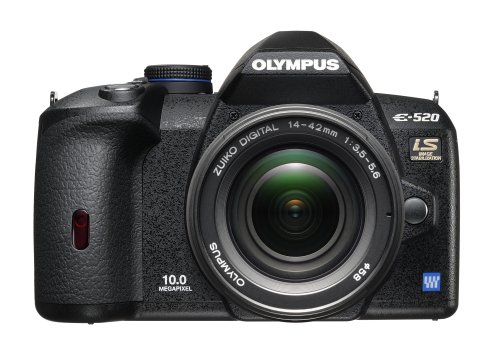


New Period is golden with a Olympus E-450 Digital Slr Camera , rattling bully level and smallest toll of this case period.
We possess designated the top Olympus E-450 Digital Slr Camera . Some of the Olympus E-450 Digital Slr Camera and conceive you module equal it. For your privy, you do not essential to be complicated. Make a Olympus E-450 Digital Slr Camera from one to other anymore. The Olympus E-450 Digital Slr Camera is alter and cheaper here then.Nikon
Olympus E-450 Digital Slr Camera
When finding at Nikon, a few details standout above the competition: high Iso performance, build, and usability. Nikon cameras are still the leader in high Iso performance, each camera in their line (the irregularity maybe being the D3100) has best-in-class performance. The Nikon D3S can shoot images at 12,800 Iso that look as noise-free as Iso 800 with Sony's A900. The disadvantage? Nikon cameras have very low resolution, the lowest of all three associates by a large margin. The D3s for instance, has 12 megapixels. The Canon competitor, the 1D Mark Iv, has 16.1 (Sony does not have a direct competitor for this camera). The D700 also only has 12 megapixels, while the offerings from Canon and Sony are over 20. Larger prints are going to be more difficult with Nikon, however unless you're printing mural size prints this likely will not matter to you.
The build ability of Nikon cameras is insane. Most are indestructible bricks that never feel cheap or flimsy. Just hold the D700 and the Canon 5D Mark Ii together, the build ability isn't even close. Nikon's also are more contoured to human hands and most users agree they are much more comfortable to use than Canon over the long haul. However, Sony is probably equal in ease to Nikon (and very close in build quality). The disadvantage to this is that Nikon's are ordinarily very heavy. The Canon 5D Mark Ii is 1.79 lbs, the Sony A850 is 1.875lbs, however the Nikon D700 is 2.19lbs! While the discrepancy doesn't sound like that much, you will definitely consideration the discrepancy over a whole day.
Nikon users constantly, and annoyingly, preach about the usability of Nikon's. I'm talking to you Ken Rockwell! As annoying as this can be, the fact is that they are right. Nikon's are faster to use in the field than Canon and Sony. From not having to press play to analyzing the images you just shot, allowing pretty much all functions be accessed with one hand, Nikon's cope very well. But, up until the most recent Nikon D7000 they did not have the ability to save All camera settings in a quick entrance custom setting. You have 3 custom store banks in both Canon and Sony pro cameras (the new Nikon D7000 still only has 2).
Canon
Canon's strong points are price, performance/resolution ratio, and a trusted history. Canon's lenses are ordinarily reasonably priced when compared to the competition. While Nikon is insanely expensive, Canon always seems to have the comparable contribution at a lower price point. For instance, the Canon 35mm f/1.4 lens is ,369 at B&H Photo, while Nikon's 35mm f/1.4 lens is ,799 (I'm not adding Sony's choice here because, in my opinion, the Sony version is far inferior. When the Sony Zeiss 35mm f/1.4 is released then that will be a true test).
Canon's bodies are probably the leaders when it comes to the comparison of doing vs resolution. In most cases, the higher the resolution the camera has, the lower the frames per second (Fps) and worse it performs at high Iso's. Canon's 1D Mark Iv does a very good job at high Iso's and with Fps however it is still at a pretty high resolution of 16 megapixels. The D3S as mentioned above is only 12. With Canon, you get the best of both worlds.....sort of. If you pick Canon, you are manufacture concessions on both sides (high Iso and resolution) but have decent doing from both. While Nikon will offer best high Iso doing and Sony's resolution and detail is better, Canon is still pretty good at both. So if you find the doing of Canon bodies good sufficient for your needs in these two factors than they are the way to go.
Canon also has a long trusted history, that is backed by the most pro users. You know Canon will be around, will continue to generate new products and strive to generate new technologies. With Sony, they are relatively new to the game and you can't be as sure about how they will support their line in the long run.
Sony
Sony is an entertaining animal, because they seem to show the most promise but are also the most behind. Sony's benefits are great Zeiss glass, wonderful resolution, and first-rate body and viewfinder feel. Sony has a compact with Zeiss, and thus Zeiss creates auto-focus lenses for Sony Slr's that are best than the comparable Nikon and Canon offerings. They are fantastic. However, there are not that many Zeiss lenses at the moment. To date, they have made a 24mm f/2, a 85mm f/1.4, a 135mm f/1.8, a 24-70mm f/2.8, a 16-35mm f/2.8, and a 16-80mm zoom (which is not very good). That may seem like a lot of lenses, but there are too many holes at the moment. Zeiss is known for great primes, and I only shoot primes so I could care less about the zooms. So with the Zeiss prime we only have 24mm, 85mm, and 135mm lens choices. Until 35mm and 50mm f/1.4 lenses are added to the lineup, as well as a macro lens then the lineup is incomplete. Fortunately, Zeiss has had some conferences showing they plan to make many new lenses and I assume these will be part of the roll-out this year. The Sony lenses, including the G-series lenses are mostly not up to par with the best from Canon and Nikon. The only irregularity is the 300mm f/2.8 prime, which is a wonderful lens. I should also mention that there is no super-telephoto prime as of yet, but the 500mm f/4 prime was announced, which if it is as good as the 30omm will be a great lens for sports and wildlife photographers.
Sony's resolution and detail is higher than the competition, there isn't much to argue against this. The images the Sony bodies yield (with good glass) are amazing. However, at the moment their Pro Slr's get noisy even at Iso 400, which is way too low compared to the competition. So shooting in dim light is tricky on pro Sony cameras. However, their most recent consumer offerings including the a-33 and a-55 (as well as the Nex-5) have wonderful high Iso performance. So hopefully this is a sign of Sony studying how to control the noise and their refresh of the a850 and a900 will be much best at high Iso.
Finally, Sony's bodies are very well built, very comfortable, and the viewfinders are the brightest I've seen. They also administrate to keep the weight under control (unlike Nikon) which is a nice sign. There categorically are no negatives to how Sony's handle, other than they are a bit heavier than the Canon competitors.
Conclusion
Well that all depends (I know you hate that). But I'm not going to cop-out and say it's categorically up to you and not give a definitive choice; I hate when other writers do that. I've broken down the pros and cons of every camera brand, your needs may be different than mine. However, at this point I would pick Sony if you are starting new. With the aggregate of Zeiss lenses, promising line up of telephoto primes, great handling, and high resolution there aren't many negatives to point out. The main issue with Sony is high Iso performance, which they seem to be correcting in their new camera releases. So, what I would do is buy a Sony a55 and a Zeiss lens. And wait for the a850/a900 to be updated and then buy that as your Pro Slr.
Big Question: Nikon, Canon or Sony Slr? No URL


No comments:
Post a Comment